


Tube & Profile Corona Treatment Systems
Tube & Profile Corona Treatment Systems | HeFeng Industrial Surface Modification
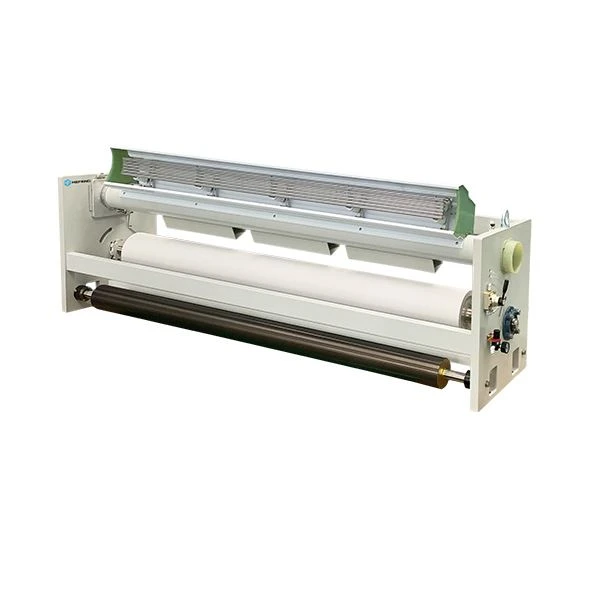
HeFeng develops and manufactures specialized Corona Treatment Systems tailored specifically for plastic tubes, pipes, and extruded profiles. Unlike standard flat-web units, our systems are engineered to address complex geometries, ensuring optimal surface activation prior to downstream manufacturing processes.


Why Choose HeFeng
Direct Manufacturing Control
Complete in-house production of high-frequency generators, electrode assemblies, and discharge stations ensuring rigorous quality consistency.
Application-Specific Engineering
Custom electrode geometries tailored precisely to match unique pipe diameters, cable dimensions, and complex profile cross-sections.
Reliable Industrial Durability
Heavy-duty structural frameworks and industrial-grade ceramic components built for 24/7 continuous extrusion line environments.
Traceable Technical Support
Direct engineering access for parameter tuning, troubleshooting, and customized retrofitting guidance.
Key Specifications
|
Technical Parameter |
Specification Range |
|
Line Speed Compatibility |
Up to 150 meters per minute |
|
Generator Power Output |
1 kW to 8 kW solid-state |
|
Treatment Diameter Range |
5 mm to 200 mm |
|
Electrode Material |
High-grade ceramic or stainless steel |
|
Power Supply Input |
380V or 415V, 3-phase, 50/60 Hz |
|
Output Frequency |
20 kHz to 30 kHz |
Product Features
Modular Electrode Configuration: Easily swap or adjust electrode modules to accommodate varying pipe diameters without replacing the entire treatment housing.
Digital Touchscreen HMI: Real-time monitoring of power output, voltage, frequency, line speed, and fault diagnostics.
Micro-Gap Adjustment: Precise mechanical micrometers allow operators to set exact air gap distances down to 0.1 mm accuracy.
Integrated Ozone Extraction Port: Direct connection points for plant exhaust systems to instantly evacuate ozone and process byproducts safely.
Quick-Thread Design: Open-hinge or split-shell housing allows seamless thread-up of continuous tubing during line startup.

Product Applications
Plastic Pipe & Tubing
Surface activation for inkjet coding adhesion on PVC, PE, and PP irrigation and plumbing pipes.
Medical Tubing & Catheters
Modifying inert fluoropolymer or silicone surfaces prior to solvent bonding or secondary printing.
Automotive Profiles
Preparing rubber and thermoplastic elastomer weatherstripping and hoses for flocking, gluing, or adhesive taping.
Cable & Wire Insulation
Pre-treating outer insulation layers before ink marking or jacketing.
System Configuration
High-Frequency Generator Unit
Solid-state inverter producing stable output frequencies between 20 kHz and 30 kHz.
Treatment Station Assembly
Fully enclosed stainless-steel chamber housing the high-voltage electrodes and dielectric rolls.
Exhaust Blower & Ozone Decomposer
Optional neutralizing unit to convert ozone back into oxygen before releasing air into the plant.
Isolation Transformer
Protects internal circuitry from plant grid voltage fluctuations and electrical noise.
How it Works

Electrical Ionization
The solid-state generator applies a high-frequency, high-voltage potential across an air gap between the powered electrode and the grounded support roll.

Corona Discharge Generation
Air molecules in the gap ionize, creating a controlled electrical discharge plasma curtain.

Substrate Passage
The extruded tube passes through the plasma field. Free electrons and ionized gas molecules bombard the polymer surface.

Surface Energy Modification
Molecular bonds on the polymer chain break, allowing polar functional groups to graft onto the surface, raising surface energy measured in dynes per centimeter.
Material Compatibility
Polyethylene
High-Density Polyethylene, Low-Density Polyethylene, and Linear Low-Density Polyethylene.
Polypropylene
Extruded profile and homopolymer or copolymer grades.
Polyvinyl Chloride
Rigid and flexible pipe grades.
Engineering Plastics
Polycarbonate, Acrylonitrile Butadiene Styrene, and Polyamide or Nylon.
Customization Options

-
Custom Electrode Diameters
Sized precisely to match unique non-standard pipe or profile outer dimensions.
-
Roll-to-Roll or Inline Integration
Mechanical mounting brackets engineered to bolt directly onto existing haul-off or extrusion frames.
-
Atmospheric Environment Control
Purged gas inlet ports for specialized inert gas plasma treatments.
-
PLC Integration
Fieldbus communication protocols for centralized plant control room monitoring.
Installation
Mechanical Mounting
Bolt the compact treatment station frame directly onto the extrusion line floor or between the cooling tank and the puller unit.
Electrical Hookup
Connect main 3-phase power, earth grounding rod, and interlock signals to the extrusion line emergency stop circuit.
Exhaust Ducting
Attach industrial ventilation ductwork to the designated exhaust collar to ensure safe ozone removal.
Commissioning Support
Step-by-step startup procedures, air-gap calibration, and dyne-pen testing validation protocols included in technical manuals.
Quality Control
Dielectric Strength Testing
All ceramic electrodes and high-voltage components undergo high-potential dielectric breakdown tests.
Full-Load Burn-In
Generators run under continuous maximum wattage load testing for 24 hours prior to crating.
Dimensional Inspection
Machined aluminum and stainless steel housings verified against engineering drawings using coordinate measuring equipment.
Traceability
Individual serial numbers assigned to all generators and stations for component and material tracking.
After-Sales Technical Support
Remote Diagnostics
Direct engineering assistance via digital diagnostic logs downloaded from the generator HMI.
Spare Parts Availability
Stocked inventory of replacement ceramic electrodes, dielectric sleeves, fuses, and inverter boards ready for rapid dispatch.
Documentation Packages
Comprehensive electrical schematics, mechanical assembly drawings, and spare parts lists supplied with every system.
Operator Training Materials
Detailed maintenance schedules and troubleshooting guides provided in standard English.
Packaging and Shipping
Export-Grade Crating
Fumigated, heat-treated plywood crates lined with moisture-barrier film and shock-absorbent cushioning.
01
Component Protection
High-voltage ceramic parts wrapped independently to prevent transit vibration damage.
02
Secure Fastening
Internal blocking and strapping secure heavy generator cabinets and stations to skid bases.
03
Shipping Documentation
Complete commercial invoices, packing lists, certificates of origin, and bill of lading data prepared for international logistics.
04
FAQ

Request a Quote
Submit Technical Parameters: Provide your substrate material, pipe/profile dimensions, current line speed, and application requirements to our engineering team.
Receive a Custom Proposal: Our applications group will analyze your requirements and return a detailed equipment specification and commercial quotation.
Contact HeFeng: Send your inquiry directly through our website to connect with our manufacturing and export specialists.
We're well-known as one of the leading tube & profile corona treatment systems manufacturers and suppliers in China. Please feel free to buy customized tube & profile corona treatment systems at competitive price from our factory. Contact us for pricelist and quotation.