

Measuring the efficiency of an Efficient Static Eliminator is crucial for both manufacturers and end - users. As a supplier of Efficient Static Eliminators, I understand the significance of accurate efficiency measurement. This process not only helps in evaluating the performance of our products but also ensures that our customers get the best value for their investment.
1. Understanding the Basics of Static Elimination
Before delving into the measurement methods, it's essential to understand how static eliminators work. Static electricity is generated when two materials come into contact and then separate. This can cause various problems in industrial processes, such as attracting dust, interfering with electronic components, and even causing safety hazards.
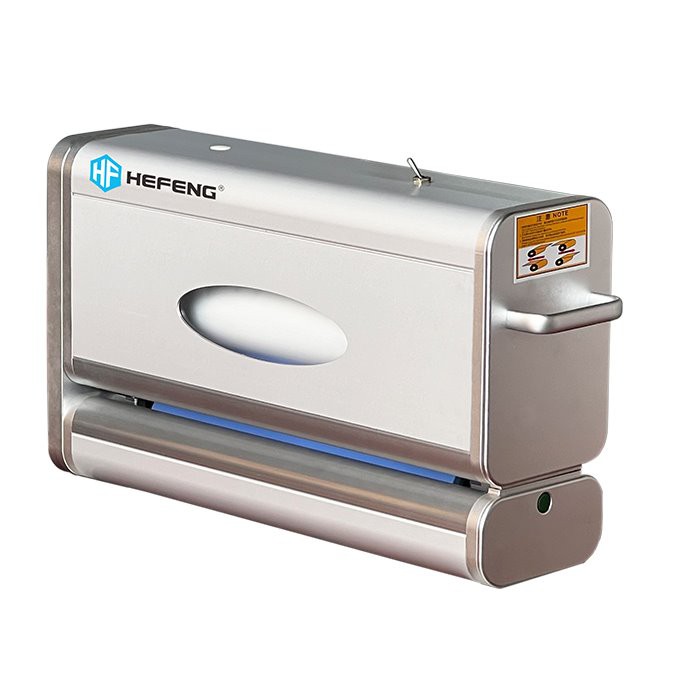

Efficient Static Eliminators work by neutralizing the static charge on the surface of objects. They typically use either ionizing technology, which generates positive and negative ions, or conductive materials to dissipate the charge. The goal is to bring the static charge on the object as close to zero as possible.
2. Key Metrics for Measuring Efficiency
2.1 Decay Time
Decay time is one of the most important metrics for measuring the efficiency of a static eliminator. It refers to the time it takes for the static charge on an object to decay from an initial level to a specified lower level. A shorter decay time indicates a more efficient static eliminator.
To measure decay time, a static field meter is commonly used. First, the static charge on the test object is measured before the static eliminator is turned on. Then, the static eliminator is activated, and the time it takes for the charge to reach a predefined level (usually 10% or 1% of the initial charge) is recorded.
For example, if the initial static charge on a plastic sheet is 10 kV, and it takes 2 seconds for the charge to decay to 1 kV (10% of the initial charge), then the decay time is 2 seconds. A well - designed Efficient Static Eliminator should have a relatively short decay time, depending on the application requirements.
2.2 Ion Balance
Ion balance is another critical factor in evaluating the efficiency of a static eliminator. It represents the difference between the number of positive and negative ions generated by the static eliminator. An ideal static eliminator should produce an equal number of positive and negative ions to effectively neutralize the static charge.
An ion counter is used to measure ion balance. This device can detect and count the number of positive and negative ions in the air near the static eliminator. A good static eliminator should have an ion balance within a narrow range, typically ±10 V/cm or less. If the ion balance is off, it may result in incomplete static charge neutralization or even the creation of a new static charge on the object.
2.3 Range of Effectiveness
The range of effectiveness refers to the distance from the static eliminator at which it can still effectively neutralize the static charge. This is important in industrial applications where the static eliminator may need to be placed at a certain distance from the target object.
To measure the range of effectiveness, the static field meter is used to measure the static charge on the test object at different distances from the static eliminator. The maximum distance at which the static eliminator can reduce the static charge to an acceptable level is recorded as the range of effectiveness.
For instance, in a printing process, if the static eliminator can effectively neutralize the static charge on the printing paper up to a distance of 30 cm, then the range of effectiveness is 30 cm. A wider range of effectiveness allows for more flexibility in the installation and operation of the static eliminator.
3. Factors Affecting Efficiency Measurement
3.1 Environmental Conditions
Environmental conditions such as temperature, humidity, and air flow can significantly affect the efficiency of a static eliminator and the accuracy of its measurement. High humidity can reduce the static charge on objects, making it more difficult to measure the decay time accurately. On the other hand, low humidity can increase the static charge, which may require a more powerful static eliminator.
Air flow can also disrupt the distribution of ions generated by the static eliminator. If there is a strong air current in the vicinity of the static eliminator, it may carry the ions away from the target object, reducing the efficiency of static charge neutralization. Therefore, it's important to control the environmental conditions during efficiency measurement as much as possible.
3.2 Object Material and Surface Properties
The material and surface properties of the test object can also influence the measurement results. Different materials have different electrical conductivities and static charge generation characteristics. For example, plastics are more likely to generate and hold static charge compared to metals.
The surface roughness and texture of the object can also affect the static charge distribution. A rough surface may have more areas where static charge can accumulate, making it more challenging to neutralize. When measuring the efficiency of a static eliminator, it's advisable to use test objects that are representative of the actual objects in the application.
4. Importance of Regular Efficiency Testing
Regular efficiency testing of Efficient Static Eliminators is essential to ensure their long - term performance. Over time, the components of the static eliminator may wear out, and the ion generation efficiency may decrease. By conducting regular tests, we can detect any performance degradation early and take appropriate measures, such as maintenance or replacement.
Moreover, regular testing can also help in optimizing the operation of the static eliminator. For example, if the decay time increases over time, it may indicate that the ionizing electrodes need to be cleaned or replaced. By making these adjustments, we can maintain the high efficiency of the static eliminator and minimize the risk of static - related problems in the industrial process.
5. Our Company's Approach to Ensuring Efficiency
As a supplier of Efficient Static Eliminators, we take several steps to ensure the high efficiency of our products. First, we use high - quality materials and advanced manufacturing processes in the production of our static eliminators. This helps in ensuring the durability and reliability of the products.
We also conduct rigorous testing on each static eliminator before it leaves our factory. Our testing procedures include measuring decay time, ion balance, and range of effectiveness under different environmental conditions. Only the products that meet our strict quality standards are released to the market.
In addition, we provide comprehensive after - sales service to our customers. Our technical support team is available to assist customers with installation, operation, and maintenance of the static eliminators. We also offer regular calibration and efficiency testing services to help our customers keep their static eliminators in optimal condition.
6. Related Products and Their Role in Static Control
In addition to Efficient Static Eliminators, we also offer other products that are related to static control, such as Web Cleaning Machine and Extended Wide - Width Web Cleaner. These products play an important role in maintaining a clean and static - free environment in industrial processes.
Web Cleaning Machines are designed to remove dust and debris from moving webs, such as paper, plastic, or textile. By keeping the web clean, they can reduce the generation of static charge, as dust particles can act as insulators and accumulate static electricity.
Extended Wide - Width Web Cleaners are specifically designed for wider webs. They can effectively clean large - area webs, ensuring uniform static control across the entire width of the web. These products, when used in conjunction with our Efficient Static Eliminators, can provide a comprehensive solution for static control in various industrial applications.
7. Contact Us for Your Static Elimination Needs
If you are looking for a reliable and efficient static elimination solution, we are here to help. Our Efficient Static Eliminators are designed to meet the diverse needs of different industries, from electronics manufacturing to printing and packaging.
We understand that every application is unique, and we are committed to providing customized solutions to our customers. Whether you need a small - scale static eliminator for a laboratory or a large - scale system for an industrial production line, we can offer the right product for you.
If you are interested in our products or would like to discuss your static elimination requirements in more detail, please feel free to contact us. Our sales team will be happy to provide you with more information, product specifications, and pricing details. We look forward to working with you to solve your static - related problems and improve the efficiency of your industrial processes.
References
- "Static Electricity Handbook" by Static Control Components, Inc.
- "Industrial Electrostatics: Fundamentals and Applications" by A. F. Cooke